SPECIALTY MEDICATIONS

Don’t Let Specialty Medication Barriers Delay Care

Overcome awareness, access, and adherence challenges. See how to move patients forward. 

Don't Let Specialty Medication Barriers Delay Care
SKIP TO A SECTION:   AWARENESS  -   ACCESS  -   ADHERENCE
WHY IT MATTERS

Connecting Healthcare Providers, Pharmacies, and Patients to Accelerate Speed-to-Therapy

The pharmaceutical industry stands at a crossroads where innovations in treatment sometimes conflict with patient realities. When medications don’t reach the patients who need them most, even the most groundbreaking therapies can fall short of their potential.

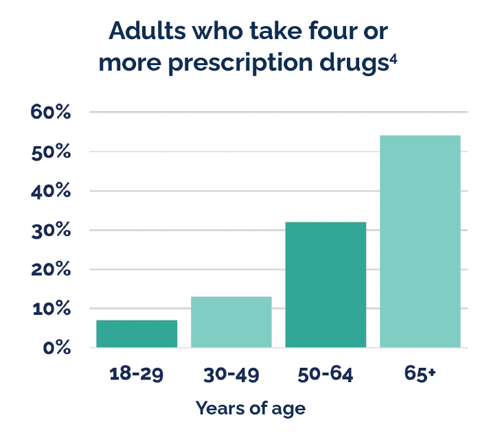
Nationally, 61% of adults—over 152 million people—take at least one prescription medication, and more than a quarter of them report taking four or more.1 With so many people managing multiple medications, there’s a lot to discuss during healthcare visits—but the average doctor’s appointment lasts less than 18 minutes.2 That’s a tight window for an in-depth discussion—especially if specialty medications are involved.

Specialty meds prior authorization

These drugs often involve complex instructions and potential side effects—conversations that take time. And many of the biggest barriers, like prior authorizations, high out-of-pocket costs, or patient hesitation, show up after the visit, when patients are on their own.

Survey Results: A Wolters Kluwer survey found that 80% of patients still have questions after leaving the doctor’s office, showing just how much information can fall through the cracks during a busy appointment.3

While awareness, access, and adherence challenges are a threat to positive outcomes, addressing these specialty medication barriers gives pharmaceutical manufacturers an opportunity to increase prescription engagement and strengthen patient-provider communications. This is especially true for patients with chronic diseases, comorbidities, or complex diagnoses.

By taking a targeted and personalized approach, pharmaceutical companies can break down these barriers, so patients can start and stay on specialty therapies they need without unnecessary delays or burdens.

AWARENESS

Overcoming Prior Authorization Hurdles


Often, the first roadblock prescribers and patients encounter before starting a specialty medication is a prior authorization (PA) requirement. Nearly six in 10 Americans (58%) reported that the PA process slowed access to needed therapies in a recent DrFirst survey.

The answer to “How long does prior authorization take?” varies widely—from 24-72 hours for standard requests to weeks for more complex specialty therapies. Not only does this slow speed-to-therapy; it also chips away at patients’ confidence in the prescribed medication.

Specialty medication approvals
are a barrier to prompt care:

prior authorization requirements cause delays for oncologists

of oncologists say PA requirements have caused treatment delays.5

patients prescribed a biologic report prior authorization delays and denials

of patients prescribed a biologic have reported a PA delay or denial.6

Even patients who already have specialty medication approval can face treatment interruptions, according to the American Gastroenterological Association.8 Having to repeatedly reauthorize approved therapies disrupts care patients depend on and can lead to setbacks in their treatment.

Technology can bridge these gaps, speeding the PA process and keeping patients informed along the way.

Want the PDF version?

We'll send it to your inbox.
how technology can help solve specialty medication barriers

ACCESS

Lowering Cost Barriers for Specialty Therapy


Breakthrough specialty medications are delivering better outcomes for patients, but they’re also pushing up costs. As a result, 28% of patients say that it is “very” or “somewhat” difficult to pay for their prescriptions.9

As out-of-pocket expenses continue to climb, it’s harder for patients to get the medications they need to stay healthy. For instance, when there is no out-of-pocket cost, prescription abandonment rates sit below 5%.10

However, as costs rise, fill rates decline by alarming percentages, with abandonment rates at 45% for prescriptions over $125 and 60% for those over $500.11

For patients managing serious diagnoses or chronic conditions, the financial strain can mean making impossible choices—sacrificing their health to cover other essential needs. For example, one in six patients with chronic obstructive pulmonary disease (COPD) reports missing a dose, lowering a dose, or delaying a prescription fill for financial reasons.12

Patient support programs and pharmaceutical hub services play a critical role in addressing specialty medication barriers by connecting patients to financial assistance, nurse navigators, or other useful support resources. These programs can drive specialty medication fill rate improvements, ensuring patients start and stay on prescribed therapies.

ADHERENCE

Keeping Patients on Track


Nearly half of patients with chronic conditions don’t take their medications as prescribed, contributing to 125,000 avoidable deaths and significant healthcare costs each year.13

For example, 70% of patients with COPD struggle with poor adherence, increasing the risk of post-hospitalization complications by 49%.14

Yet, only 31% of COPD patients report being shown how to use inhalers effectively.15

Behavioral barriers can also keep patients from starting or staying on specialty therapy. These barriers are often rooted in the awareness gap discussed earlier and include:

  • Concerns about side effects: Without clear education, patients may research their medication online and become overwhelmed by potential adverse effects, leading to prescription abandonment.
  • Reluctance to add medications: Patients taking multiple medications may hesitate to add another, particularly if they feel their current regimen is already complex or burdensome.
  • Fear of administration method: Self-injectable specialty medications can create significant anxiety for patients who have never administered injections, creating a barrier even when the prescription is filled.
  • Questioning medical necessity: Asymptomatic patients or those with early-stage chronic conditions may not perceive the urgency of specialty therapy, particularly if they don't understand the long-term consequences of delaying treatment.

These behavioral medication access barriers highlight why putting education resources in patients' hands—on their ever-present smart phones—is fundamental to improving speed-to-therapy. When patients don't understand why a medication matters, no amount of prior authorization streamlining or financial assistance will ensure they stay on track with treatment.

The key is giving patients the right information at the right time—and digital tools make this easier than ever. Unlike old-school paper materials, digital resources are convenient, accessible whenever and wherever patients need them, and can be updated in real time. Connecting patients to relevant information—especially shortly after the prescription is sent to the pharmacy—empowers them to achieve better outcomes and healthier lives.

medication access barriers

Want the PDF version?

We'll send it to your inbox!

Sources


1. Sparks G, Kirzinger A, Montero A, Valdes I, Hamel L. Public opinion on prescription drugs and their prices | KFF. Published October 4, 2024.

2. Neprash HT, Everhart A, McAlpine D, Smith LB, Sheridan B, Cross DA. Measuring primary care exam length using electronic health record data. Medical Care. 2020;59(1):62-66. doi:10.1097/mlr.0000000000001450

3. Patient education, diversity, and trust: Debunking myths about what patients want. Wolters Kluwer. Published July 12, 2023. 

4. Kirzinger A, Neuman T, Cubanski J, Brodie M. Data note: Prescription drugs and older adults. KFF. Published August 9, 2019. 

5. Nearly all oncology providers report prior authorization causing delayed care, other patient harms. ASCO. Published January 25, 2023.

6. 2023 AMA Prior Authorization Physician Surrvey. American Medical Association. Published May 2024. 

7. Constant BD, De Zoeten EF, Stahl MG, et al. Delays related to prior authorization in inflammatory bowel disease. PEDIATRICS. 2022;149(3). doi:10.1542/peds.2021-052501

8. Sofia MA, Feuerstein JD, Narramore L, Chachu KA, Streett S. White Paper: American Gastroenterological Association Position Statement: The Future of IBD Care in the United States–Removing Barriers and Embracing Opportunities. Clinical Gastroenterology and Hepatology. 2024;22(5):944-955. doi:10.1016/j.cgh.2024.01.050

9. Lopes L, Montero A, Presiado M, Hamel L. Americans’ Challenges with Health Care Costs. KFF. Published May 7, 2024.

10. Medicine spending and affordability in the U.S. IQVIA. Published August 4, 2020. 

11. Ibid

12. Osterweil N. Costs of drugs can be breathtaking for COPD patients. Medscape. Published July 19, 2024.

13. Kim, D., Combs, K., Downs, J., Tillman III, F. Medication Adherence: The Elephant in the Room. U.S. Pharmacist. US Pharm. 2018;43(1)30-34.

14. Wen, X., Qiu, H., Yu, B. et al. Cost-related medication nonadherence in adults with COPD in the United States 2013–2020. BMC Public Health. Published March 20, 2024.

15. Pasquale CB, Choate R, McCreary G, et al. Self-reported COPD medication use and adherence in the COPD Foundation Patient-Powered Research network. Chronic Obstr Pulm Dis. 2021; 8(4): 474-487.